



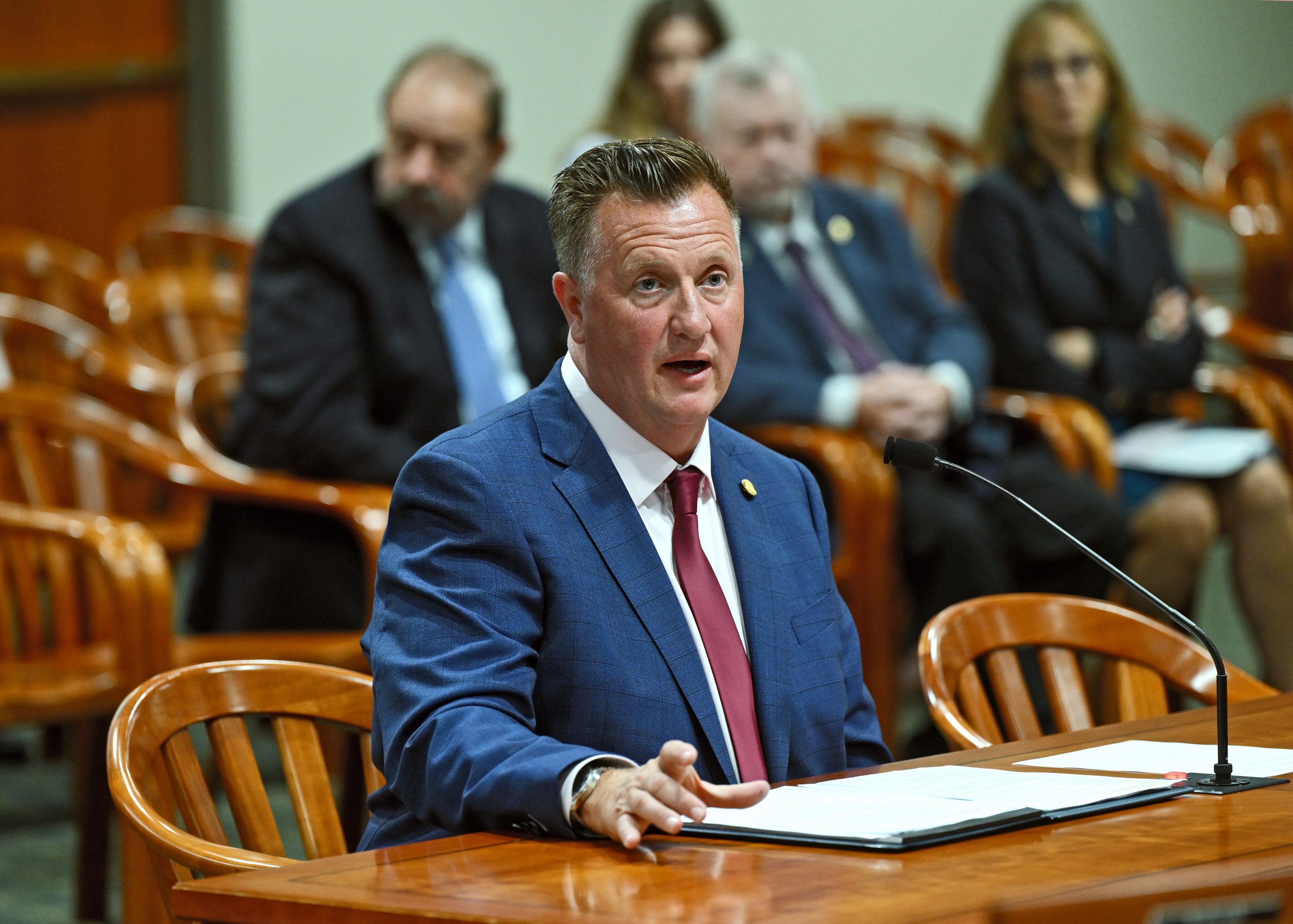
Michigan is facing hundreds of millions of dollars in penalties for the failed functionality of public assistance programs, including SNAP and Bridge cards. House Oversight Subcommittee on State and Local Assistance Programs Chairman Jason Woolford (R-Howell) today highlighted a new subcommittee report outlining those ramifications and laid out recommendations for how the state Department of Health and Human Services (MDHHS) could administer assistance programs more effectively and save the state from wasting taxpayer dollars on costly penalties.
“Oversight in government is critical to ensure people are well-served by transparent and efficient government services and programs,” Woolford said. “We need to root out any waste, fraud and abuse in these systems to help benefits get to those who truly need them. We’ve identified areas where the state has fallen short or is out of compliance. Now, it’s critical to see through reforms.”
The report notes that the current administration of benefits has allowed millions of dollars in fraud through a lack of security, front-end verification, and other means. At a hearing last year, Woolford went through the MiBridges Application with a MDHHS official to demonstrate the heavy reliance on self-attestation and lack of front-end verification in the application. Woolford noted this is of concern, as there are nearly 1.5 million Michigan residents receiving food stamps and the state spent over $3 billion on the program in 2024. The Office of the Inspector General prevented more than $300 million in fraud that same year, despite the lack of commonsense safeguards like chip-enabled Bridge Cards in place.
Beginning Oct. 1, 2027, Michigan also faces the potential for penalties due to recent changes to SNAP funding in the federal Working People’s Tax Cut Act as states with higher error rates must provide a higher match to make up the difference in overpayments or underpayments.
Under Gov. Whitmer’s administration, Michigan’s yearly average SNAP error rate is above 10%. The rate must fall below 6% to avoid penalty.
“We are coming up on a very expensive reckoning, and it’s going to cost taxpayers,” Woolford said. “We need to act. If this is the best Michigan can do as far as error rate, the state will pay a $320 million penalty. The taxpayers I represent can’t afford that, and spending money to pay penalties means less money can go to programs for those truly in need.”
The subcommittee made several recommendations to alleviate issues, including requiring the most front-end information on applications that federal law allows, photo ID and signature verification on all Bridge cards and prohibiting out-of-state purchases, conversion of all physical Bridge cards to chip-enabled devices, requiring MDHHS to partner with a federal program aimed at lowering error rates, and updating the Legislature to provide monthly quality control reviews so that legislative fixes can be swift to help prevent fraud. Woolford said plans have already been introduced in the Legislature to address some of these recommendations.




© 2009 - 2026 Michigan House Republicans. All Rights Reserved.
This site is protected by reCAPTCHA and the Google Privacy Policy and Terms of Service apply.